
This page contains additional resources for the Systems class.
Lecture – 1.25.2017
Additional Resources: Systems
In the video below, The Power of Networks from the RSA, UK, Manuel Lima, senior UX design lead at Microsoft Bing, explores the power of network visualization to help navigate our complex modern world.
Video from the RSA, UK, 2012
The videos below address the different facets of systems theory and explain the dynamic relationships at work within both natural ecosystems and social systems. We have intentionally included videos that explain these ‘systems’ principles’ in scientific terms as well as those that say the same thing in narrative form concerned with quality of life issues. A common theme in all of these is the relationship between parts and wholes and the important concept of emergence (the sum is greater than the parts). These provide a good overview of the important dynamics at work in complex systems — the greater context for everything we design. Transition Designers are aware of these often subtle dynamics within the systems for and within which they work and can learn to ‘leverage’ these dynamics, much as a martial artist will leverage the momentum of his opponent.
This brief video discusses the characteristics and dynamics found within complex adaptive systems, in scientific terms. Concepts such as chaos and complexity theories, network dynamics etc. are addressed.
Excerpt from the film Mind Walk by Fritjof Capra. Here a scientist explains the inherent coherence at work within complex systems and their interdependent, interconnected structure.
Scientist James Gleick provides an overview of chaos and complexity theories that have greatly influenced our understanding of the dynamics of change (and transition).
Biologist and holistic scientist Brian Goodwin talks about the principle of emergence and the relationship between ‘parts’ and ‘wholes’.
Educator and environmentalist David Orr discusses education, eco literacy, systems thinking during a class at Schumacher College.
Discussion Session – 1.30.2017
Additional Resources: Wicked Problems
This page contains additional resources for the Wicked Problems discussion session.
The video below shows how the Yellowstone Park ecosystem was transformed and restored as the result of the trophic cascade that followed the reintroduction of wolves in the 1990s. Similarly, Transition Design seeks to trigger large scale change through modest interventions in socio-technical systems.
Video from Sustainable Human, February 2014, edited by Steve and Chris Agnos
The video below provides a brief explanation of a wicked problem.
Video by the Complexity Academy, 2016
This video is an interview with a French journalist held captive by ISIS for 10 months. In it, he offers a systemic analysis of ISIS as a wicked problem that requires a counter-intuitive approach to resolution.
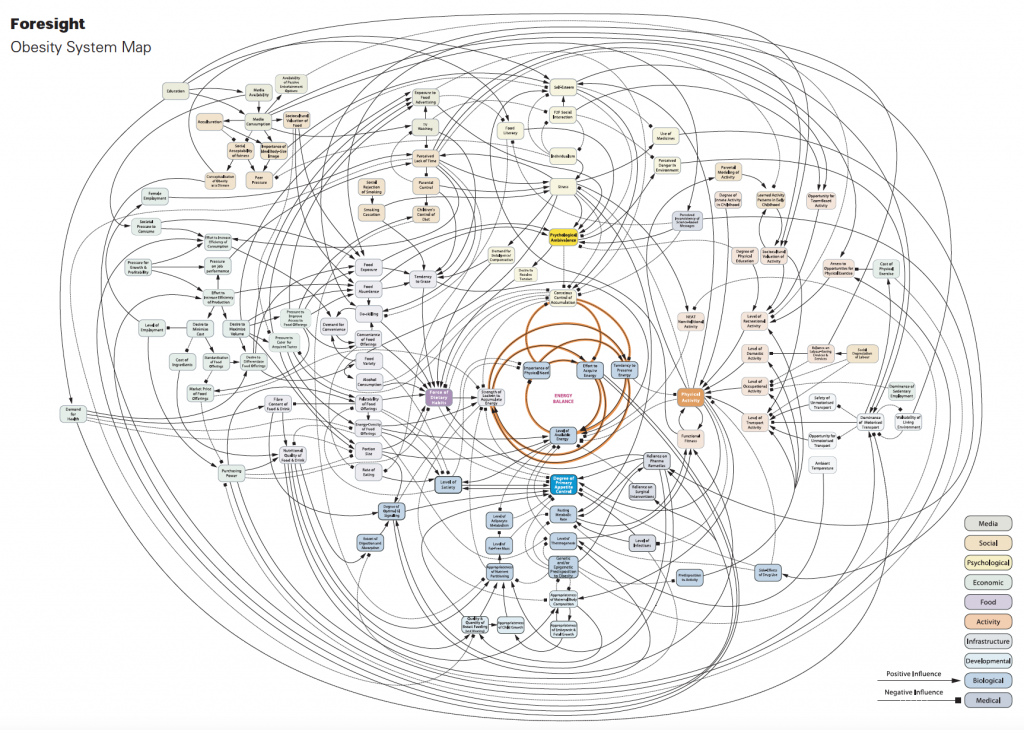
Two examples of visualizing a wicked problem are shown below. The first was an assignment in an information design course taught in 2001 at CCA, diagram by Chanpory Rith. The challenge was to diagram the roots of terrorism described in a 2001 essay by Fritjof Capra inspired by the attacks on 9/11 called “Trying to Understand”. Note that values and feelings are represented as causal elements within the ‘ecology’ of the problem. The second diagram maps the root problems and influencers of obesity.
Information design by Chanpory Rith; class assignment, Instructor Terry Irwin, California College of Arts, San Francisco, 2001. Based upon an essay by Fritjof Capra entitled “Trying to Understand” (Download PDF)
This map of the wicked problem of obesity was developed by the UK government https://www.gov.uk/government/publications/reducing-obesity-obesity-system-map. Note the various categories of influencers as well as the interconnections and interdependencies.
The diagram below resembles a wicked problem map in its representation of the complexities of the climate change agreement debated in Paris, 12.15.
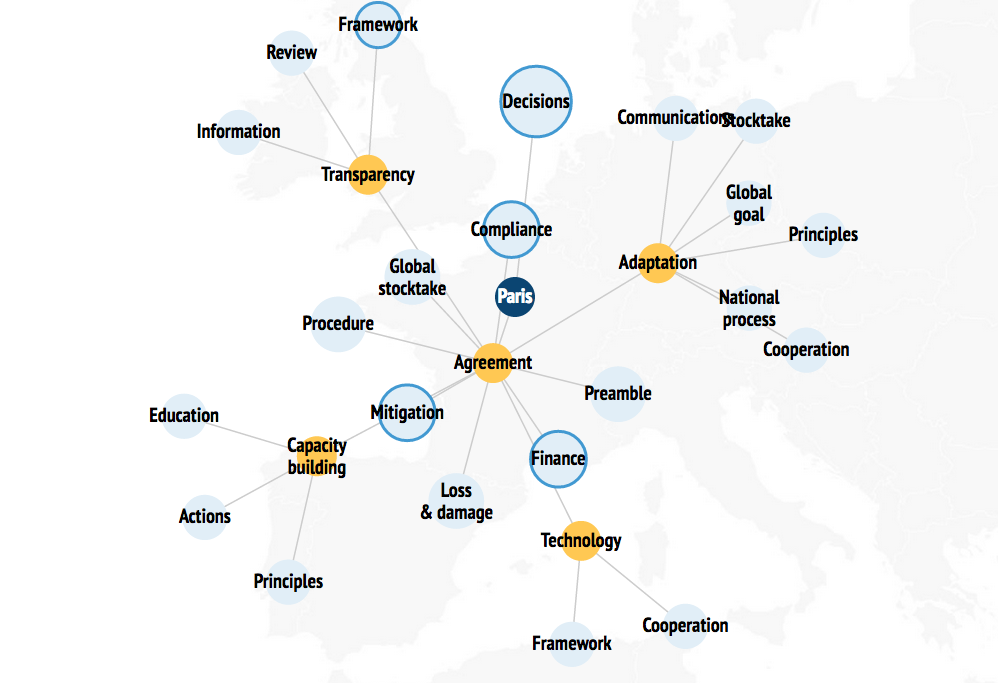
For a fully interactive version of this map visit http://www.carbonbrief.org/interactive-the-paris-climate-deal
Guest Lecture (Cheryl Dahle) – 2.1.2017
Additional Resources: Solving the Wicked Problem of Overfishing
This page contains additional resources for the Solving the Wicked Problem of Overfishing lecture.
Cheryl Dahle, journalist, entrepreneur and found of the non-profit Future of Fish discusses the global wicked problem of overfishing
Future of Fish developed this introduction video to help teach chefs and food-service professionals about the importance of Storied Fish.